How We Diagnose Heart Failure: Diagnostic Testing at Our Hot Springs Cardiology Clinic
Dr. Jeffrey Tauth explains how heart failure is diagnosed in Hot Springs, AR, from BNP blood tests and echocardiograms to the testing that finds the cause.
Jeffrey G. Tauth, M.D., F.A.C.C.Board-Certified Interventional Cardiologist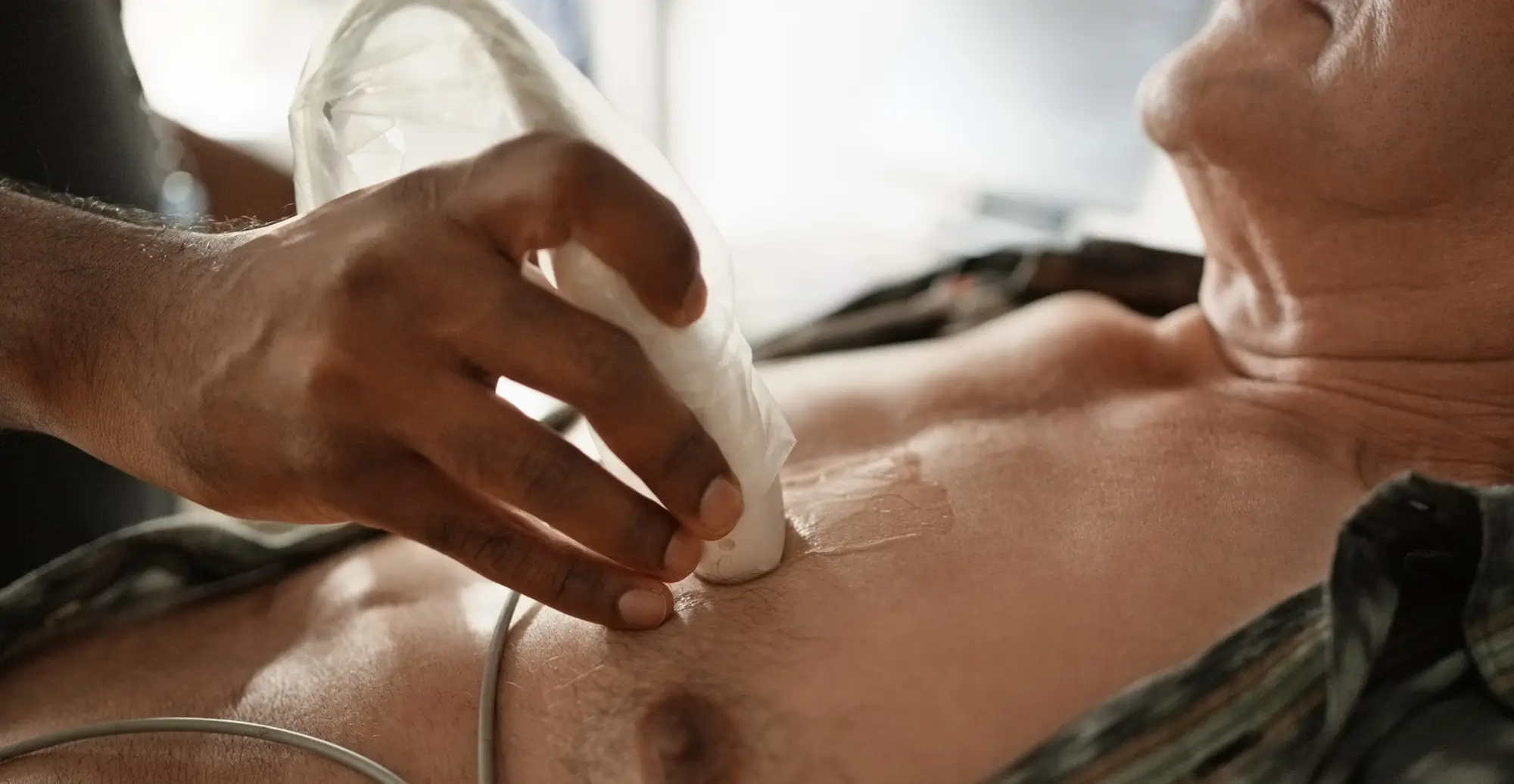
A heart failure diagnosis rests on more than one test. Blood work, imaging, and a careful exam each answer a different part of the question, and at Hot Springs Heart and Vascular, a cardiology clinic in Hot Springs, Arkansas, the cardiac testing happens in the same building where you’re seen.
That workup has two jobs. The first is confirming whether heart failure is behind your symptoms. The second is finding out what caused it, since the cause steers every treatment decision that follows.
In this post, Dr. Jeffrey Tauth, a board-certified interventional cardiologist who has diagnosed and treated heart failure in central Arkansas for more than 30 years, walks through each test, what it shows, and how the results shape your treatment plan.
Step One: The Heart Failure History and Physical Exam
Before ordering any test, Dr. Tauth asks about the pattern of your symptoms: how far you can walk before getting winded, whether you’ve needed extra pillows to sleep comfortably, whether your shoes or waistband feel tighter by evening, and whether your weight has climbed without a change in diet. He also reviews your medications, since some common drugs, including certain anti-inflammatory pain relievers, can worsen fluid retention.
The exam then looks for physical signs of fluid and strain on the heart:
- Swollen neck veins, which reflect elevated pressure inside the heart
- Crackling sounds in the lungs, a sign of fluid in the air sacs
- An extra heart sound or a new murmur, which can point to a weakened muscle or a valve problem
- Swelling in the ankles, lower legs, or abdomen
Step Two: Blood Tests, Including BNP
The BNP Test for Heart Failure
When excess pressure and volume stretch the heart’s walls, the heart releases a hormone called B-type natriuretic peptide (BNP). A BNP or NT-proBNP blood test measures that hormone, and a normal result in someone with shortness of breath usually rules heart failure out. That makes BNP a fast way to narrow down the cause of breathlessness.
A high result points toward heart failure but doesn’t confirm it, because kidney disease, older age, and other conditions also raise BNP levels. An elevated BNP moves the workup on to imaging.
A simple blood test can quickly narrow down whether heart failure is behind shortness of breath.
Other Blood Work
A standard panel checks for conditions that can cause or worsen heart failure, along with values that determine which medications are safe for you:
- Complete blood count: Anemia forces the heart to work harder.
- Kidney function and electrolytes: These guide medication choices and dosing.
- Thyroid levels: An overactive or underactive thyroid can strain the heart.
- Iron studies: Iron deficiency is common in heart failure and treatable.
- Blood sugar, A1c, and cholesterol: These assess diabetes and coronary risk.
Step Three: The Echocardiogram
The echocardiogram is the centerpiece of a heart failure diagnosis. This ultrasound shows the heart in motion and supplies the measurements that define the type of heart failure and often reveal its cause.
| Echocardiogram Finding | What It Tells Dr. Tauth |
|---|---|
| Ejection fraction | Whether the heart failure is the reduced or preserved type |
| Wall motion | Whether one section of muscle moves poorly, a pattern that often signals damage from a blocked artery |
| Wall thickness and chamber size | Whether high blood pressure has thickened the muscle or the heart has enlarged |
| Valve function | Whether a leaking or narrowed valve is driving the problem |
| Filling pressures | How much pressure builds inside the heart as it fills, the key finding in heart failure with preserved ejection fraction |
An echocardiogram is painless and involves no needles or radiation. A technician glides a gel-coated probe across your chest while the images record.
Step Four: ECG and Chest X-Ray
A quick ECG adds three heart-failure-specific clues. Dr. Tauth reads it for atrial fibrillation and other rhythm problems that can cause or worsen heart failure, signs of an old heart attack, and electrical delays between the two lower chambers. That last finding helps determine whether you may later benefit from cardiac resynchronization therapy, which paces both lower chambers so they beat in sync.
A chest X-ray can show an enlarged heart or fluid in the lungs, and it helps rule out lung conditions that cause similar breathlessness. A normal chest X-ray doesn’t rule heart failure out, which is why the echocardiogram remains the deciding test.
Step Five: Finding the Cause of Heart Failure
Once the type of heart failure is clear, the next round of testing focuses on why it developed.
Testing for Blocked Coronary Arteries
Coronary artery disease is the leading cause of heart failure with reduced ejection fraction, so ruling it in or out comes first. Stress testing and nuclear imaging reveal whether any region of the heart muscle runs short on oxygen as your heart rate climbs. When those results or the echocardiogram’s wall motion findings suggest blockages, a cardiac catheterization maps the coronary arteries directly. Dr. Tauth performs catheterization at the Vascular Center of Hot Springs, so a blockage found there can often be treated before the catheter comes out.
Monitoring for Rhythm Problems
An arrhythmia that comes and goes can drive heart failure without showing up on a single ECG. A wearable monitor records your rhythm for days or weeks, and an implantable cardiac monitor, a small device placed just under the skin of the chest, records far longer. Dr. Tauth places implantable cardiac monitors when an intermittent rhythm problem is suspected.
Advanced Imaging
When the cause remains unclear, a cardiac MRI can characterize the heart muscle in fine detail and identify inflammation, scarring patterns, or less common conditions such as cardiac amyloidosis. Patients who need this level of imaging are referred for it.
“He is the BEST..has saved my husband more than once. HIGHLY recommended. If your “inconvenienced” with a wait or tests or whatever required so be it. You want the best care correct? He’s the best.”
Individual results may vary. Reviews reflect one person’s experience and are not typical of, or a guarantee of, any outcome.
Testing Continues After the Diagnosis
Follow-up testing tracks how your heart responds to treatment. A repeat echocardiogram after several months on medication shows whether your ejection fraction has improved, and that result can reshape the plan, including whether a defibrillator is recommended. New symptoms, weight changes, or shifts in blood work also prompt a fresh look.
Because the cardiac testing happens in-clinic at Hot Springs Heart and Vascular, those follow-up studies take place where you already receive your care.
Hot Springs Heart Failure Diagnosis FAQ
Do I Need to Prepare for Heart Failure Testing?
Most heart failure tests need no preparation. A BNP blood test, an ECG, and an echocardiogram require nothing special. Stress testing and catheterization come with specific instructions about eating and medications, which the clinic provides when scheduling.
Can Heart Failure Be Diagnosed Before Symptoms Start?
Yes. An echocardiogram ordered to evaluate a murmur, high blood pressure, or a prior heart attack sometimes reveals a weakened or thickened heart before any symptoms appear. Finding heart failure at this stage lets treatment begin before symptoms ever develop.
What Is the Difference Between BNP and NT-proBNP?
Both come from the same precursor molecule released by the heart. NT-proBNP stays in the bloodstream longer and reads at higher numbers, so the two tests use different reference ranges. Either one works for diagnosis, but results from one can’t be compared directly with the other.
Start Your Heart Failure Workup in Hot Springs
If breathlessness, swelling, or fatigue has you questioning your heart, Dr. Jeffrey Tauth can run the cardiac testing in his clinic and walk you through every result. Call Hot Springs Heart and Vascular at (501) 767-4278 to schedule an appointment.
References
MedlinePlus, U.S. National Library of Medicine. “Natriuretic Peptide Tests (BNP, NT-proBNP).” https://medlineplus.gov/lab-tests/natriuretic-peptide-tests-bnp-nt-probnp
Written by
Jeffrey G. Tauth, M.D., F.A.C.C. · Board-Certified Interventional Cardiologist
Interventional cardiologist with more than 30 years in cardiac and vascular care, practicing in Hot Springs and Mena, Arkansas.