Peripheral Artery Disease: Why Leg Pain and Weakness May Be a Vascular Problem, Not a Muscle Problem
Leg pain when walking can be peripheral artery disease, not a muscle problem. Dr. Jeffrey Tauth explains PAD symptoms, diagnosis, and treatment options.
Jeffrey G. Tauth, M.D., F.A.C.C.Board-Certified Interventional Cardiologist
Leg pain during walking is one of the most commonly misattributed symptoms in medicine. Patients are told it is aging, arthritis, a pulled muscle, or simply being out of shape. In a significant number of cases, none of those explanations are correct. The real cause is peripheral artery disease, a circulation problem that shares the same underlying process as coronary artery disease but shows up in the legs instead of the heart.
Peripheral artery disease affects a reported 155 million people worldwide, and it is frequently underdiagnosed because up to four in ten people with the condition have no leg pain at all. When symptoms are present, they are easy to dismiss as something unrelated to the vascular system.
In this post, Dr. Jeffrey Tauth, a board-certified interventional cardiologist who has treated peripheral artery disease in Hot Springs and central Arkansas for more than 30 years, explains what PAD is, why it is so often missed, and what patients should know about diagnosis and treatment.
What Peripheral Artery Disease Actually Is
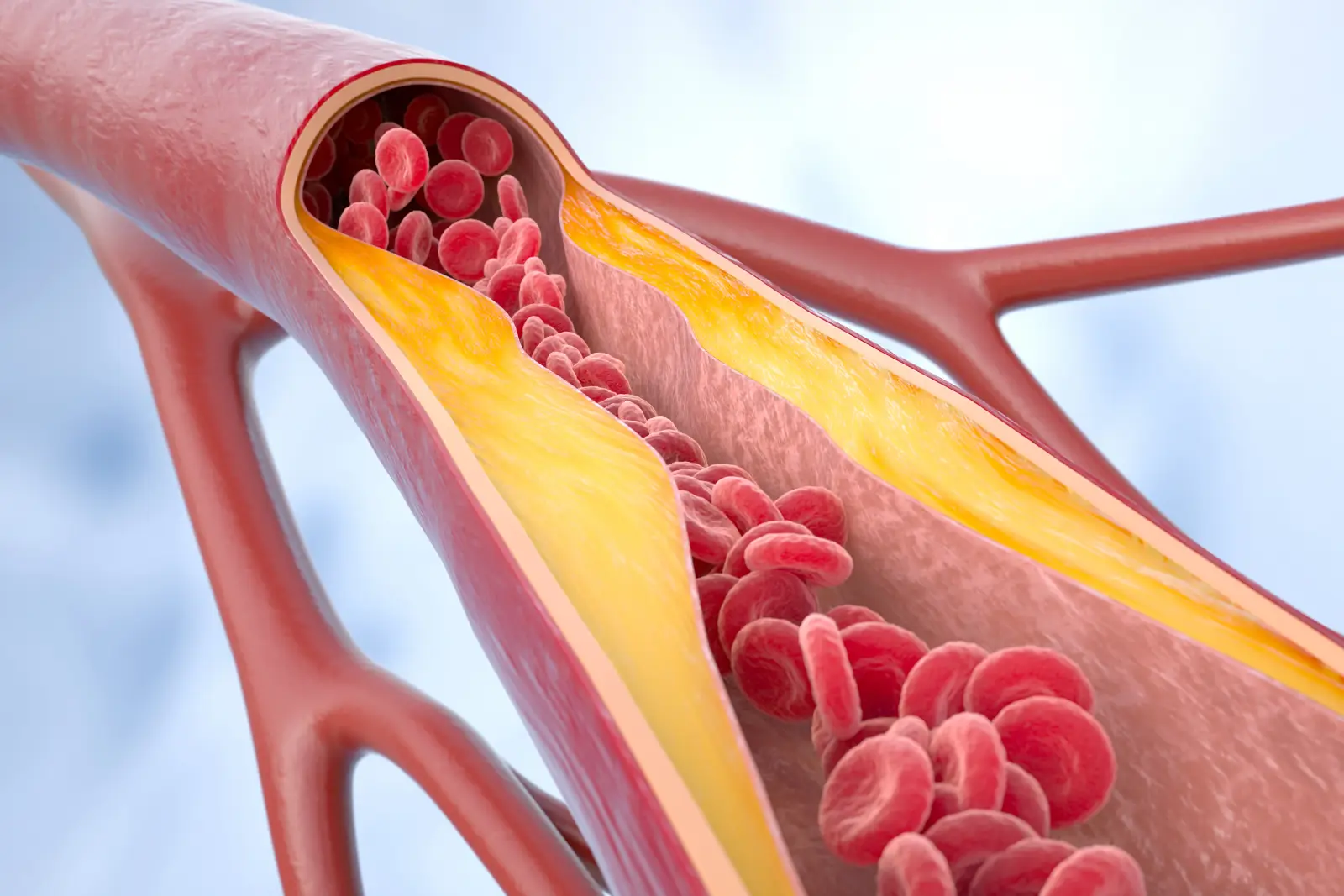
Peripheral artery disease, sometimes called peripheral vascular disease (PVD), develops when the arteries supplying blood to the legs, and less commonly the arms, become narrowed by plaque buildup. The process is called atherosclerosis, and it is the same mechanism that causes coronary artery disease in the heart. Plaque made of cholesterol, fat, and other substances accumulates along the artery walls, gradually reducing the space through which blood can flow.
As the arteries narrow, the leg muscles receive less oxygen-rich blood, particularly during activity when demand for blood flow increases. That mismatch between oxygen demand and oxygen supply is what produces the classic PAD symptom: pain, cramping, or fatigue in the legs that comes on with walking and improves with rest.
Up to four in ten people with peripheral artery disease have no leg pain at all, which is part of why the condition is so often missed.
PAD Is a Marker for Disease Elsewhere in the Body
Atherosclerosis rarely stays confined to one area. A patient with significant plaque buildup in the leg arteries very often has similar buildup occurring in the coronary arteries and the carotid arteries supplying the brain. This is why PAD carries risks beyond the legs. Patients with PAD have a meaningfully elevated risk of heart attack and stroke, which is part of why the American Heart Association recommends that anyone at risk for PAD discuss it with a physician even before symptoms appear.
Symptoms of Peripheral Artery Disease
Classic Symptoms: Intermittent Claudication
The hallmark symptom of PAD is called intermittent claudication: cramping, aching, or fatigue in the calves, thighs, or buttocks that comes on with walking and resolves within a few minutes of rest. It occurs because the narrowed arteries cannot deliver enough blood to keep up with the muscle’s oxygen demand during activity.
Claudication has a few recognizable characteristics:
- It is reproducible: the same walking distance tends to trigger it consistently
- It improves quickly with rest, typically within a few minutes
- It tends to worsen over time as the underlying artery narrowing progresses
- It may affect one leg or both, depending on which arteries are involved
Symptoms Patients Often Miss
Claudication is the symptom most associated with PAD, but it is far from universal. A substantial percentage of PAD patients experience no leg pain at all, and others have symptoms that do not fit the classic pattern. Other signs of reduced blood flow to the legs include:
- Numbness, coldness, or a change in skin temperature in the feet or lower legs
- Loss of hair on the legs or feet
- Skin that appears unusually smooth or shiny
- Slow-healing or non-healing wounds or sores on the feet or lower legs
- Changes in skin color, including a bluish tint
Because so many patients have minimal or no leg pain, PAD often goes undiagnosed until a wound fails to heal or another complication develops. Anyone with significant cardiovascular risk factors should be evaluated for PAD even in the absence of textbook symptoms.
How Peripheral Artery Disease Is Diagnosed
Physical Examination and History
A PAD evaluation begins with a detailed history covering leg symptoms, smoking history, and risk factors including diabetes, high blood pressure, and high cholesterol. The physical exam includes checking pulses in the legs and feet and looking for skin or temperature changes that suggest reduced circulation.
Ankle-Brachial Index
One of the primary diagnostic tools for PAD is the ankle-brachial index (ABI), a simple, non-invasive test that compares blood pressure readings at the ankle to blood pressure readings at the arm. A significantly lower reading at the ankle indicates reduced blood flow to the leg and supports a PAD diagnosis.
Vascular Imaging
When the ABI or clinical picture suggests PAD, imaging provides a more detailed view of exactly where and how severe the narrowing is. Duplex ultrasound is commonly used as a first-line imaging tool because it is non-invasive and provides direct visualization of blood flow through the arteries. In more complex cases, additional imaging or angiography may be used to map the vascular anatomy before a treatment decision is made.
At Hot Springs Heart and Vascular, PAD diagnostic workups are performed in-clinic. Patients are not referred to a separate facility for vascular testing.
Treatment Options for Peripheral Artery Disease
Lifestyle and Risk Factor Management
For many patients, particularly those with mild to moderate PAD, the first-line treatment is a structured walking program. Supervised exercise therapy, involving intervals of walking followed by rest, has been shown to meaningfully improve walking distance and reduce symptoms over time.
Smoking cessation is one of the single most impactful steps a PAD patient can take. Quitting smoking significantly improves long-term outcomes and slows disease progression. Managing blood pressure, cholesterol, and blood sugar are equally important, since these risk factors drive the same atherosclerotic process responsible for the arterial narrowing.
Medications
Several medications are commonly used in PAD management, including statins to manage cholesterol and reduce plaque progression, and cilostazol, a medication specifically approved to improve walking distance in patients with claudication. Antiplatelet therapy is also frequently used to reduce the risk of the cardiovascular events associated with PAD, including heart attack and stroke.
Procedural and Surgical Treatment
When PAD is advanced or does not respond adequately to lifestyle changes and medication, catheter-based procedures can restore blood flow directly. These include angioplasty, in which a balloon is used to widen the narrowed artery, and stenting, in which a small mesh tube holds the artery open after it has been widened. In more complex cases, atherectomy may be used to remove or break down heavily calcified plaque that would not respond well to angioplasty alone.
Dr. Tauth performs the full range of these procedures at the Vascular Center of Hot Springs, the first cardiovascular ambulatory surgical center in central Arkansas. Because the center operates independently, device selection is made based on the individual patient’s anatomy rather than institutional purchasing contracts, which matters for a condition where the severity and location of blockages varies significantly from patient to patient.
Peripheral artery disease does not resolve on its own. Early diagnosis substantially reduces the risk of it progressing to a limb-threatening stage.
Why Early Diagnosis Matters
Peripheral artery disease is a lifelong condition. It does not resolve on its own, and without treatment, it can progress to critical limb ischemia, a severe reduction in blood flow that threatens the viability of the limb and can ultimately lead to amputation. Early diagnosis and treatment substantially reduce that risk and give patients more options for managing the disease before it reaches an advanced stage.
Beyond the legs themselves, the cardiovascular risk associated with PAD is a significant reason not to delay evaluation. A patient whose only concern is leg pain during walking may not realize that the same disease process elevates their risk of a heart attack or stroke. Identifying and treating PAD early is as much about protecting the heart and brain as it is about protecting the legs.
Schedule an Appointment With Dr. Tauth
If you are experiencing leg pain, cramping, or other symptoms that may indicate peripheral artery disease, Dr. Jeffrey Tauth welcomes new patients at Hot Springs Heart and Vascular. Call (501) 767-4278 directly. A real staff member, not an automated system, answers the phone, and same-day appointments are available for patients with active symptoms.
Written by
Jeffrey G. Tauth, M.D., F.A.C.C. · Board-Certified Interventional Cardiologist
Interventional cardiologist with more than 30 years in cardiac and vascular care, practicing in Hot Springs and Mena, Arkansas.